
SEOUL / LIVING HERITAGE
Bukchon Hanok Village: visit legally and respectfully
Bukchon is not an open-air theme park. It is a lived-in neighbourhood with an enforced red-zone visiting window, steep lanes and rules that should shape your route before the first photograph.
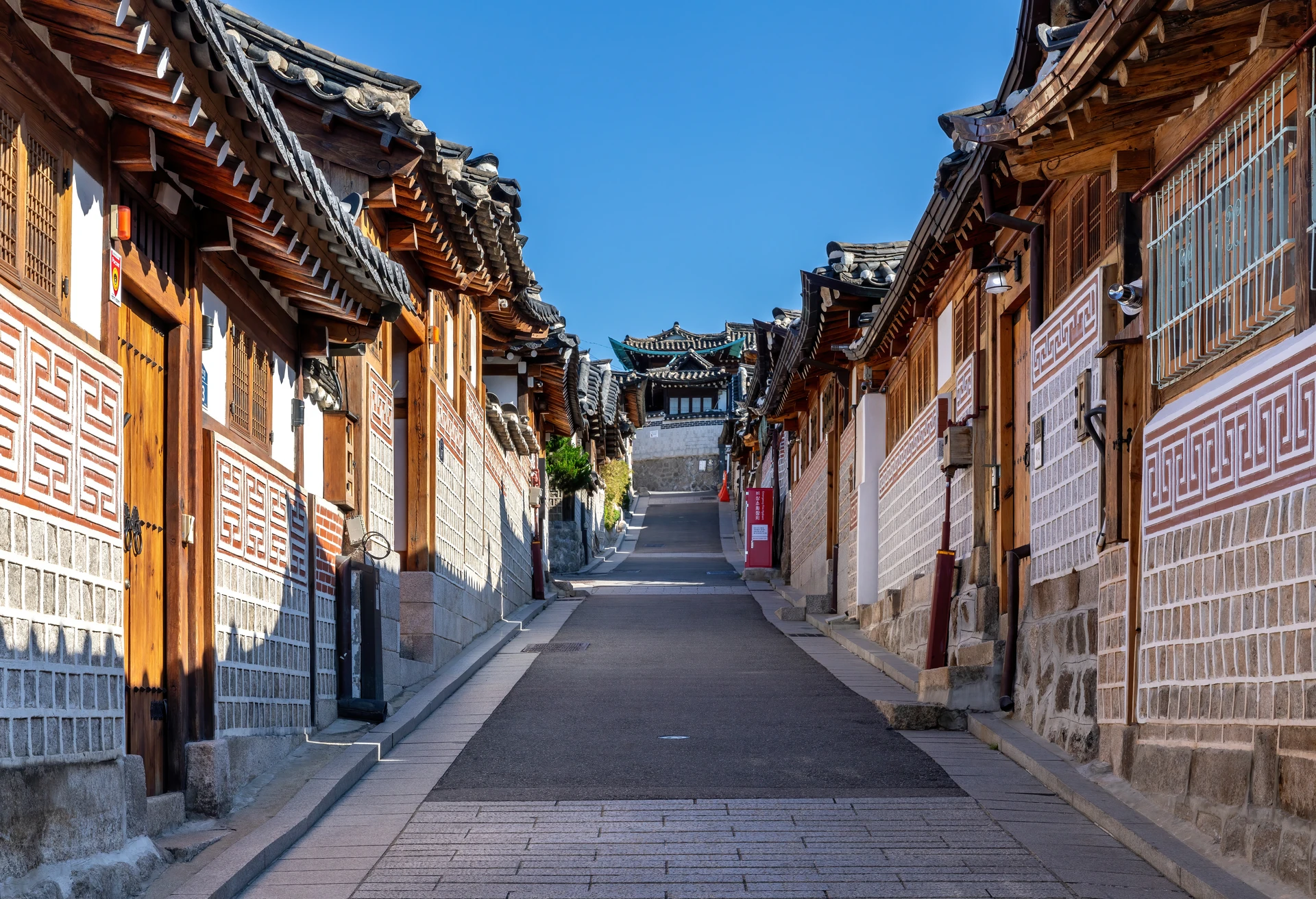
The red zone is open to tourists only from 10:00 to 17:00
The most important fact is not a photo point. Seoul’s official notice designates part of Bukchon-ro 11-gil as a red zone where tourist visits are prohibited from 17:00 until 10:00 the following morning. Enforcement began on 1 March 2025, with a stated fine of KRW 100,000. Plan your walk inside the permitted 10:00–17:00 window.
This restriction does not mean every lane in the wider Bukchon area shares an identical boundary. The city map distinguishes red, orange and yellow zones. That is why “Bukchon closes at five” is too crude, while “all of Bukchon is always open” is unsafe. Use the official English map to identify the restricted area rather than relying on a social-media pin.
The same official notice says chartered buses are restricted on designated roads around Bukchon-ro, Bukchon-ro 5-gil and Changdeokgung 1-gil, with enforcement from 1 January 2026. Independent travellers should not interpret a bus drop-off as proof that a tour vehicle may enter the residential lanes.
Read Seoul’s official restriction notice and open the official English Bukchon map before travelling. Save the map offline if your mobile data may be unreliable.
Start at Anguk Station, then confirm the exact lane
Visit Seoul lists Anguk Station Exit 3 on Seoul Subway Line 3 as the practical public-transport approach. Save the Korean station name, 안국역, and the destination name, 북촌한옥마을. Korean map apps may locate small alleys and public facilities more precisely when the Korean spelling is used.
Do not ask a taxi simply for “Bukchon” and expect the best photo street. The district is a real neighbourhood between Gyeongbokgung and Changdeokgung, with homes, workshops, galleries and public hanok buildings spread across slopes. A precise public destination such as the Bukchon Cultural Center or the official information point makes a safer meeting place than a private doorway.
If your day also includes a palace, check that palace’s closure day and ticket rules separately. Bukchon’s permitted visiting window does not guarantee entry to Changdeokgung, Gyeongbokgung or a public hanok. Treat the neighbourhood walk and each managed attraction as separate operating decisions.
Build a quiet 90-minute walk instead of chasing every view
A useful short plan is: arrive from Anguk Station, orient yourself at a public information point, choose one Gahoe-dong lane, and return through a different public street toward Anguk or Samcheong-dong. Ninety minutes is an editorial planning allowance, not an official duration. It includes slopes, photographs, a short rest and navigation.
The official English map groups lanes by character, including Gye-dong, Gahoe-dong, Samcheong-dong and Sagan-dong. These labels are better planning tools than a viral list of “eight views” because they help you understand where you are walking. Choose one theme—hanok architecture, workshops or a connection to a palace—rather than treating each residential corner as a required checkpoint.
Visit Seoul identifies the Bukchon Cultural Center as a place to learn the area’s history and cultural context. A cultural stop can turn a photograph into an informed visit, but opening hours and programmes can change. Check the specific facility on the day instead of assuming that the neighbourhood’s permitted tourist hours are its business hours.
Keep a fixed turnaround time. The red-zone boundary is not a reason to rush through at 16:55. Aim to be clear of the restricted lane well before 17:00 so a navigation mistake, steep climb or photo stop does not create a violation.
“Silent tourism” is a practical rule, not a slogan
Visit Seoul describes Bukchon as a densely populated residential area and asks visitors to keep noise to a minimum. It specifically asks for small groups of no more than ten, no microphones or loudspeakers, no littering and no photography or filming inside homes even when a door is open. These rules should change how you move, speak and frame photographs.
A beautiful wooden gate may still be someone’s front door. Do not block it, lean equipment on it or wait there for a long portrait session. Keep tripods and bags out of narrow pedestrian lines. If another visitor is already using a small viewpoint, move on rather than building a queue across a resident’s entrance.
Commercial activity, costume photography and guided experiences may have rules beyond ordinary walking. Book only through an operator that can explain the meeting point, route and local restrictions. This guide does not use an affiliate button because the current registry has no exact English-language Bukchon product whose landing page and conditions were verified.
Food and drink belong in businesses that welcome customers, not on a resident’s doorstep. Carry rubbish until you find a proper bin. A quiet visit is not less interesting; it is the condition that lets a living heritage neighbourhood remain liveable.
Plan for steep lanes, heat and limited resting points
Bukchon’s most photographed lanes climb sharply. The image in this guide shows the gradient clearly, but it does not measure accessibility. Travellers using wheelchairs, walkers or pushchairs should consult the official map, ask the tourist information service about the least steep approach and be willing to choose public hanok facilities or lower streets instead of the steep red-zone lane.
Wear shoes with reliable grip. In rain, stone, paving and painted road surfaces can become slippery. In summer, the climb can feel much harder than its map distance suggests. In winter, shaded lanes may remain cold or icy. Carry water, but remember that public toilets and seats are not available at every turn.
Photography is usually easiest when you stop briefly at a wider public space, check that you are not capturing the inside of a home, and then continue. A quiet weekday may feel different from a weekend, but this guide does not claim live crowd levels. Check current official notices shortly before the visit.
Save these Korean names and one clear fallback
- 북촌한옥마을 — Bukchon Hanok Village
- 안국역 3번 출구 — Anguk Station Exit 3
- 북촌로 11길 — Bukchon-ro 11-gil, including the restricted red-zone area
- 북촌문화센터 — Bukchon Cultural Center
- 삼청동 — Samcheong-dong
- 창덕궁 — Changdeokgung Palace
- 경복궁 — Gyeongbokgung Palace
If the slope, weather or crowd makes the planned lane unsuitable, use a public cultural facility or a lower street instead of forcing the route. Namsangol Hanok Village is a different, purpose-managed attraction south of central Seoul; it is not a substitute with the same history, but it may suit a traveller who needs a more clearly defined visitor facility.
Official sources and update note
- Seoul Metropolitan Government: Bukchon special-management restrictions
- Visit Seoul: Bukchon Hanok Village visitor information
- Seoul Metropolitan Government: English Bukchon map
Checked 11 October 2026. Visiting restrictions, fines, facility hours, transport and access conditions can change. The suggested 90-minute walk is editorial guidance, not an official route duration. This page does not claim first-person experience or current crowd conditions.