
TRAVELMAPJOURNEY / FIELD GUIDES
Your first trip to South Korea: choose a route you can actually enjoy
Palaces, a hanok neighbourhood, a fortress or a coastal city? Start with the experience you want, then decide how much travelling belongs in your holiday.
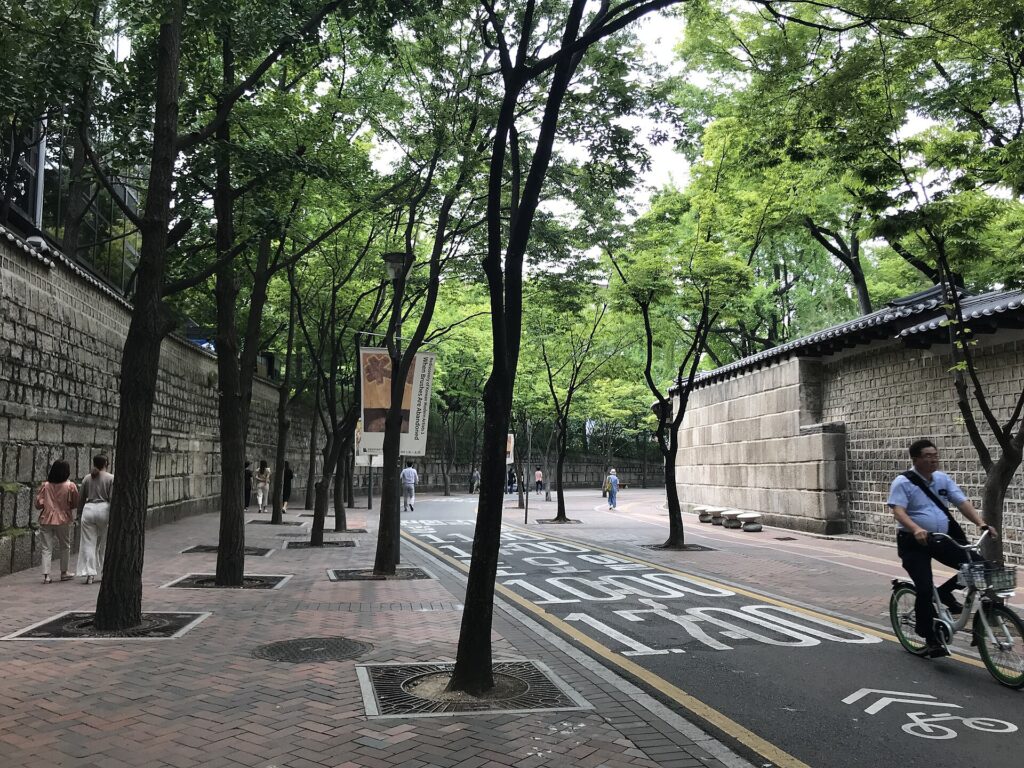
Choose an experience before choosing cities
A first trip does not have to cover the whole country. The useful question is what you would regret missing: a palace courtyard, time to eat your way through a neighbourhood, a night festival, or an evening near the sea. Pick two priorities. Use them to decide where to sleep, instead of booking scattered hotels and trying to connect them later.
For a short visit, Seoul can be a base rather than a stopover. Gyeongbokgung gives a clear introduction to royal architecture; Suwon adds a different experience with a fortress woven into a modern city. Jeonju works when traditional buildings and an unhurried overnight stay matter more than fitting in another major city.
Three workable starting plans
| Time available | Suggested shape | What you give up |
|---|---|---|
| 3–4 nights | One Seoul base; one palace day, neighbourhood time and an optional day trip | A long-distance multi-city tour |
| 6–7 nights | Seoul plus one second base, such as Jeonju | Trying to include every famous destination |
| 9–10 nights | Two or three bases, with a spare half-day for weather or travel delays | A tightly scheduled attraction every morning |
These are suggested trip lengths, not minimum stays or train timetables. Count usable days: a late arrival and an early departure should not be treated as two sightseeing days. If you fly home from the same city you arrive in, plan the return journey before adding the furthest destination.
Match the place to the pace
Seoul: choose one area for the morning and a nearby area for the afternoon. A palace visit is easier to enjoy when it is not squeezed between two cross-city transfers. Suwon: choose a section of the fortress and time in Haenggung-dong instead of treating the whole wall as compulsory. Jeonju: leave room for a meal, a courtyard visit and a quiet overnight stay if that is the reason you came.
A festival can become the centre of the trip, but only after its date and your return transport are confirmed. Do not add a distant evening event simply because a photograph looks spectacular. Think about where you will sleep when it finishes.
Book in the order that protects your plans
- Confirm arrival and departure airports and the nights you actually have.
- Choose the event or experience with the least flexible date.
- Check intercity connections, then book accommodation near the part of town you will use.
- Add one main activity to each day. Keep smaller stops optional.
- Save Korean place names and addresses offline, alongside booking confirmations.
Before paying for a room, compare the total price, cancellation deadline, bed type and luggage access. A cheaper room across the city can be a poor fit if it forces repeated transfers. For a hanok stay, ask whether bedding is on the floor and whether the bathroom is private.
Keep the first evening simple
Make your arrival plan boring on purpose: reach the accommodation, eat nearby, charge your phone and find the next morning’s departure point. If the flight is delayed, that plan still works. Put the most important timed reservation on a later day whenever your schedule allows.
TravelMapJourney’s English guides are designed to help with those choices. Start with transport if you have not booked your route, or with the Seoul and Jeonju guides if you are choosing what the trip should feel like.
Sources & updates
- Visit Seoul: Gyeongbokgung Palace ↗
- UNESCO: Hwaseong Fortress ↗
- Jeonju Hanok Village: official map and directions ↗
Itineraries and suggested time allowances are our planning recommendations. Check the linked official pages for current opening times, tickets and operating changes before travelling. Accommodation availability and live transport fares are not checked here.