
SEOUL / MODERN HISTORY
Seodaemun Prison History Hall: A Respectful Winter Visit
Seodaemun Prison History Hall is not a themed attraction. It preserves a site where independence activists were imprisoned under Japanese colonial rule and where pro-democracy activists were held after liberation. This guide helps you arrive before the winter cutoff, follow the site with context, and decide what to pair with it.
Your visit at a glance
Winter hours are 09:30–17:00 from November through February; ticketing ends at 16:30. Adults pay KRW 3,000. Use Dongnimmun Station (독립문역), Exit 5 on Seoul Subway Line 3. Allow about two hours for a first visit and arrive by 14:30 if you want time for both indoor galleries and outdoor buildings.
Why does this site need more context than a quick photo stop?
The prison opened in 1908 as Gyeongseong Prison during the period of Japanese control and was renamed Seodaemun Prison in 1912. Independence activists were incarcerated here during colonial rule. After Korea’s liberation, the institution continued under different names, and political opponents and pro-democracy activists were also imprisoned during authoritarian governments. The detention centre moved away in 1987; preserved buildings later became part of Seodaemun Independence Park, and the history hall opened in 1998.
This long timeline matters. If you describe the site only as a prison from the Japanese colonial period, you miss its later place in Korea’s struggle for democracy. If you focus on one famous prisoner alone, you miss the many people represented in the archives, cells and memorial spaces. Start with one question: how did a building designed to control people become a place where Korea now remembers resistance and civic freedom?
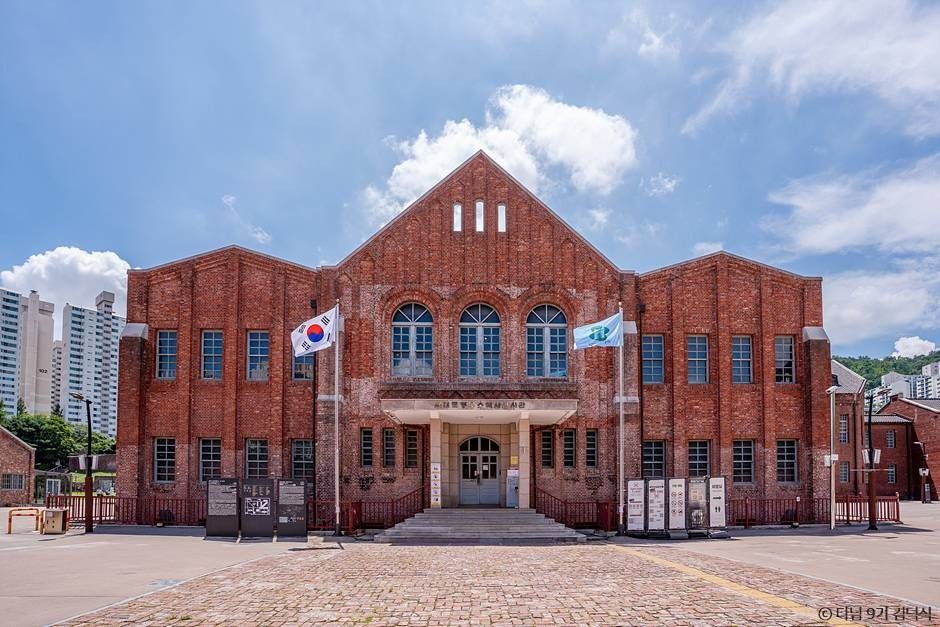
The grounds include the former Administration and Security Office, prison blocks, a central guard building, workshop areas, an execution ground and outdoor memorial spaces. Some displays address imprisonment, torture and death. Visitors with children should prepare them for difficult material rather than presenting the museum as an ordinary family attraction.
When should you arrive in winter?
| Season | Opening hours | Last ticket |
|---|---|---|
| November–February | 09:30–17:00 | 16:30 |
| March–October | 09:30–18:00 | 17:30 |
The hall closes every Monday. If Monday is a public holiday, it closes the following day instead. It also closes on 1 January and on the day of Seollal and Chuseok. Check the date-specific notices on the official English website, especially around Korean holidays.
Adult admission is KRW 3,000. Teenagers pay KRW 1,500 and children aged 7–12 pay KRW 1,000. Children aged six and under and visitors aged 65 and older are admitted free. Other exemptions and discounts require evidence and may need to be processed at the staffed ticket office. The staffed counter accepts cards, cash, Zero Pay and Samsung Pay; the ticket machine accepts cards. Bank transfer is not available.
Do not treat 16:30 as a sensible arrival time. It is only the final ticketing cutoff. For a first visit, arrive by 14:30; with children, older relatives or a strong interest in the exhibitions, arrive by 14:00. Winter daylight also matters because the route moves between buildings and outdoor spaces.
The museum announced website improvement work from 16 to 30 November 2026. The site should remain available, but temporary delays or errors may occur. A website error does not mean the museum is closed. Before making a second reservation attempt, check whether your first request was recorded; for urgent confirmation, the official contact number is +82-2-360-8590.
How can you use two hours without rushing the difficult parts?
- First 25 minutes: establish the timeline. Begin in the Administration and Security Office. Read enough to understand the institution’s changes from the colonial period through post-liberation authoritarian rule. Choose a few names or events to follow rather than trying to memorise every panel.
- Next 35 minutes: central building and prison blocks. Look at how surveillance and movement were organised. These are preserved spaces of incarceration, not sets for playful photographs. Move slowly and let other visitors read without crowding them.
- Next 30 minutes: workshop and outdoor structures. This section exposes you to winter weather. Wear shoes with grip and keep a layer you can put back on quickly after leaving a heated gallery.
- Next 20 minutes: execution ground and related spaces. The material is emotionally heavy. Give children and other companions permission to step away. Completing every room is not a requirement for a meaningful visit.
- Last 10 minutes: memorial and reflection. Leave time to consider one person, event or idea you want to learn about later. Include the walk back to the exit, toilets and collecting belongings in your schedule.
The official site currently lists the special exhibition Red Brick House, Seodaemun Prison in Prison Block 10 from 15 August 2026 through 31 December 2028. Another exhibition about liberation and its unresolved stories is listed through 31 December 2027. These dates help with planning, but room access and display details can change. Add 20–30 minutes if a special exhibition is important to you.
An audio or docent programme can deepen the visit, but do not assume it is included automatically with an admission ticket. Check the programme and reservation pages separately. If the Korean reservation system is difficult to use during the maintenance period, save a screenshot of any confirmation and avoid submitting repeated bookings until you know whether the first one succeeded.
What is the simplest route from central Seoul?
Save both the English and Korean names: Seodaemun Prison History Hall / 서대문형무소역사관. The address is 251 Tongil-ro, Seodaemun-gu, Seoul / 서울 서대문구 통일로 251. Take Seoul Subway Line 3 to Dongnimmun Station / 독립문역 and follow Exit 5. The museum describes the entrance as within 50 metres of the exit.
From Seoul Station, one straightforward option is Line 4 to Chungmuro, then a transfer to Line 3 for Dongnimmun. From areas around Jongno or Gwanghwamun, compare a bus with a subway transfer from your actual starting point. Check the final platform direction in your map app rather than relying only on a memorised list of stations.
Parking exists at the Seodaemun Independence Park roadside lot and the underground Dongnimmun Culture Park lot, but the museum explicitly warns that spaces are limited and recommends public transport. The roadside rate for a standard car is KRW 300 per 10 minutes. The underground lot is KRW 200 per five minutes and has a height limit of 2.3 metres. A group reservation does not reserve a parking space. For most international visitors staying near a subway line, Dongnimmun Station is the more predictable choice.
If someone in your group has limited mobility, check the exact accessible route and current lift operation before departure. “Near Exit 5” does not automatically mean every traveller should use the same staircase. Save the museum phone number and the Korean destination name so a taxi driver or station staff member can help if needed.
How should you prepare children and visit respectfully?
The exhibitions include accounts and representations of confinement, torture and execution. With younger visitors, begin with the larger idea: people were deprived of freedom because they resisted colonial rule or authoritarian power. Let them decide when to leave a difficult room. A short, thoughtful visit is better than forcing a child through every display.
Give each person one observation question before entering. Why are the prison buildings arranged around a central point? What does a small window reveal about control? How did prisoners preserve identity and solidarity? Questions about space and choices help children engage without turning suffering into spectacle.
Food is not permitted inside the history hall, and pets are not allowed except guide dogs. Flash and tripod photography are prohibited, as is commercial filming without permission. Do not stage comic prison poses or treat cells and the execution ground as social-media props. Photography can document a visit, but it should not displace the people and history being remembered.
Winter clothing works best in layers because the visit alternates between indoor galleries and outdoor paths. Leave large luggage at your hotel or a station facility rather than assuming the museum can store it. Bring water for before or after the visit, but follow the no-food rules inside the exhibition spaces.
What fits before or after the history hall?
Dongnimmun Gate (독립문) and Seodaemun Independence Park are the easiest additions because they are nearby and continue the historical setting. In winter, protect the museum’s closing time first. A reliable sequence is the history hall, then a short park walk if daylight and weather remain.
The National Memorial of the Korean Provisional Government is another meaningful neighbour, but combining two substantial history museums can make the day emotionally and mentally dense. If both matter to you, start in the morning, take a real lunch break and enter Seodaemun Prison History Hall no later than 14:00. Otherwise, split them across different days.
If you are choosing between this visit and a palace, compare the experience rather than asking which is “better.” Seodaemun is a concentrated modern-history visit with difficult material; Gyeongbokgung is an outdoor palace complex that introduces royal architecture and court history. Our Gyeongbokgung first-visit guide helps plan the palace option. For a sheltered art-and-history day, see our National Museum of Korea winter route. The first Korea itinerary guide can help you avoid packing too many major sites into one day.
Korean-speaking companions can use the independently edited Korean guide, which gives more detail on local parking, family preparation and domestic travel decisions.