
The War Memorial of Korea (전쟁기념관) is free, central and much larger than many first-time visitors expect. The current official hours are 09:30–17:40, with last admission at 17:00. If you have two hours, do not rush through every gallery. Choose either the Korean War galleries or the broader War History galleries, add the Memorial Hall, then use the remaining time for the outdoor equipment display.
Plan the visit in three decisions
1. Arrive by 15:30 for a useful two-hour visit; 17:00 is the last-entry cutoff, not a comfortable starting time.
2. Use Samgakji Station Exit 12 on Line 6 for the simplest approach, about a three-minute walk according to the museum.
3. Treat the site as a memorial first. Read personal stories and historical context before treating the outdoor machines as photo objects.
1. Use the museum’s current 17:40 closing time
Some older English listings still show an 18:00 closing time. The official War Memorial of Korea website and its education site currently state 09:30–17:40 and last admission at 17:00. That forty-minute interval is enough for a very limited stop, not for understanding the museum. For a first visit, arrive before 15:30; if you want indoor galleries, a break and the outdoor collection, arriving around 14:30 is safer.
| Item | Current official information | Practical meaning |
|---|---|---|
| Opening hours | 09:30–17:40 | Start by 15:30 for two hours |
| Last admission | 17:00 | Choose one small area if arriving late |
| Regular closure | Mondays | Holiday weeks can shift the closure |
| Admission | Permanent galleries are free | Some rental exhibitions and programs cost extra |
The official education site also lists New Year’s Day, Lunar New Year’s Day and Chuseok Day as closure days. When Monday falls within a public-holiday period, the closure may move to the following day, so check the museum notice rather than relying only on a map app. Permanent galleries are free, but “free museum” does not mean every activity is free. A 2026 mobile AR program, for example, is separately priced at KRW 7,500 for an individual participant and uses a smartphone.
2. Know the difference between an armistice and an ending
The museum covers a long span of Korean military history, but most international visitors come with questions about the Korean War. One piece of context changes how the galleries read: large-scale fighting began in 1950 and the 1953 Armistice Agreement stopped the fighting, but it did not create a peace treaty. The peninsula remains divided. The museum therefore functions not only as a collection of weapons but also as a site of remembrance, national narrative and continuing political memory.
Visitors should expect a South Korean institutional perspective. That does not make the objects or testimony unimportant; it means you should notice who is speaking, which experiences are centered, and how the story is organized. Personal belongings, records of displacement and material from participating nations often communicate the human scale more clearly than a rapid sequence of dates. Give those objects time rather than trying to photograph every label.
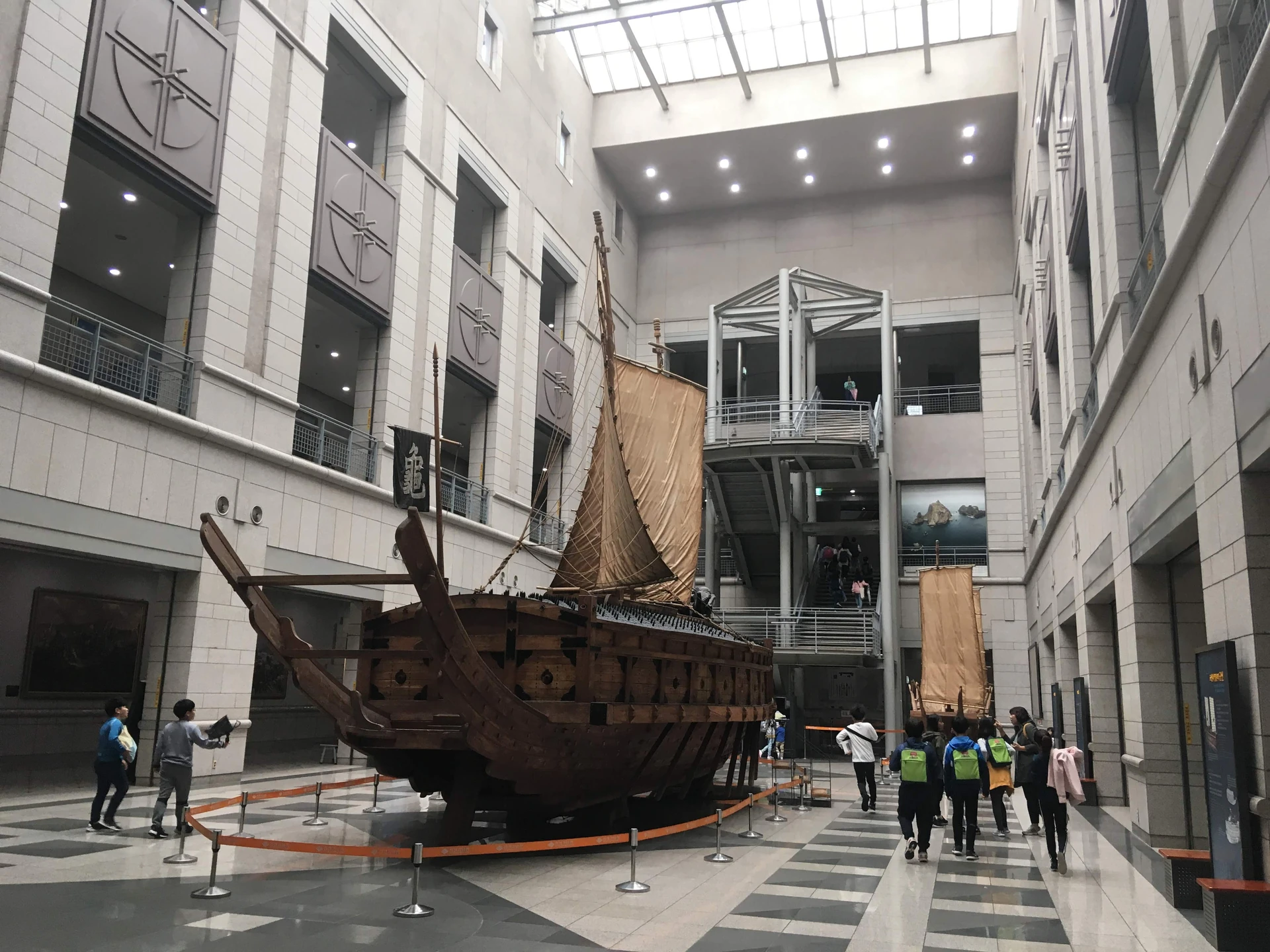
The official tourism description divides the indoor museum into several areas, including the Memorial Hall, War History, Korean War, Expeditionary Forces and later armed-forces or defense-development displays. Gallery names and routes can change during renovations, so use the floor map you receive on the day. A sensible first visit is built around one question: “How did the Korean War affect ordinary people?”, “How did warfare change across Korean history?”, or “How is sacrifice remembered here?” One clear question produces a better visit than attempting to complete the building.
3. A two-hour route that leaves room to think
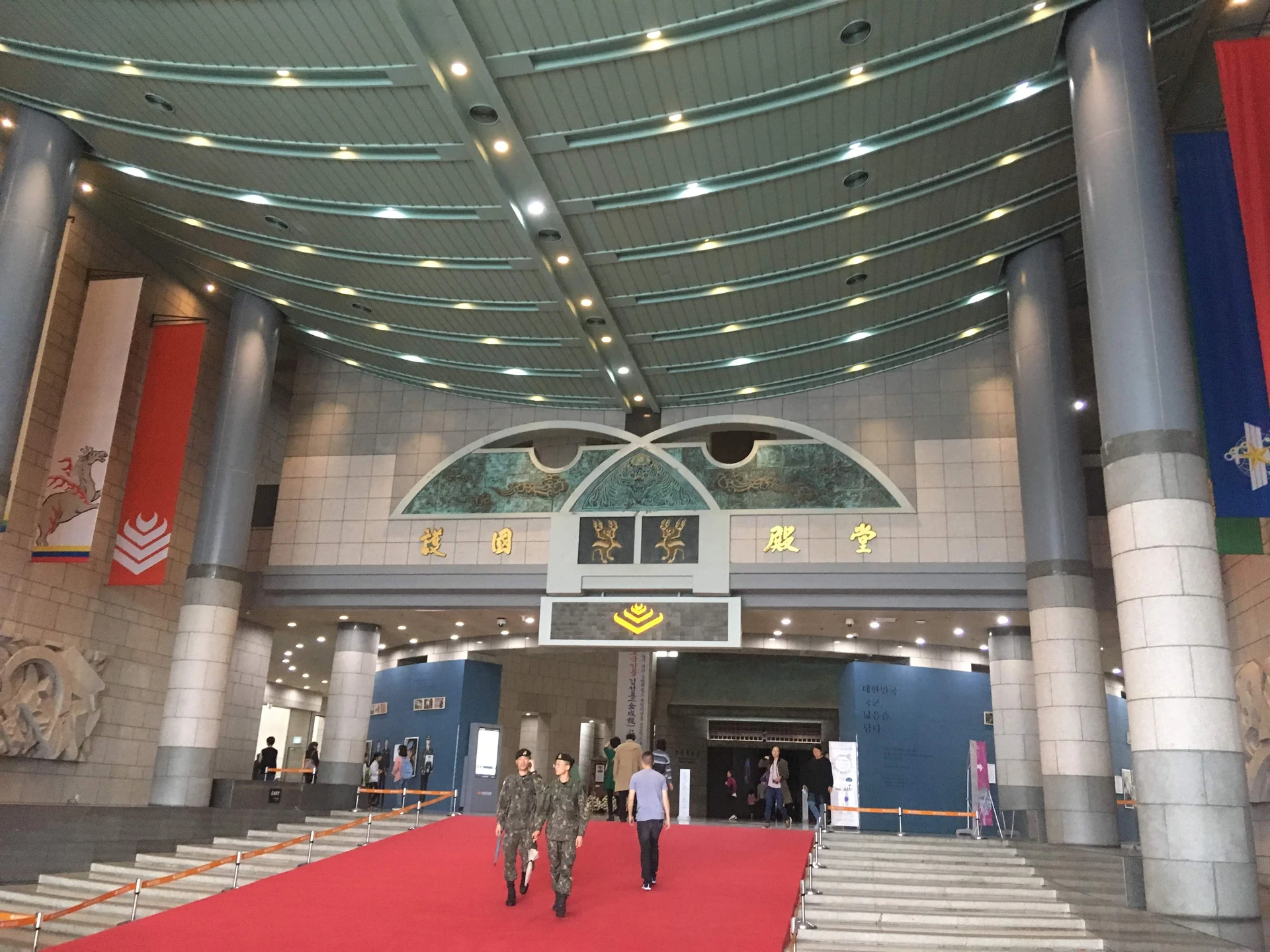
Orient yourself, collect the current map and enter the Memorial Hall. This frames the building as a commemorative site before the chronological galleries.
Choose the Korean War galleries or War History galleries. Read fewer objects carefully and allow time for translated text.
Take a short break, then see the Statue of Brothers and selected outdoor equipment if weather and daylight are comfortable.
In winter, the outdoor section can feel much colder than the subway approach suggests because of wind across the open site. If the weather is good when you arrive, consider seeing the outdoor display first and moving inside afterward. On a wet or icy day, spend the full two hours indoors. Admission is free, so there is no need to force a complete visit simply to “get your money’s worth.” Returning for a second focused visit is more respectful and less exhausting.
If you are visiting with children, alternate one gallery segment with a break or a large visual object. Ask simple observation questions instead of giving a continuous lecture. The museum’s subject includes violence, death, displacement and division, so adults should preview age suitability and be ready to explain difficult images. The optional AR learning program is officially described for children in grade three and above and takes about sixty minutes; choosing it means shortening the permanent-gallery route.
4. Save the Korean station and exit name
The easiest subway approach is Samgakji Station (삼각지역), Exit 12 on Line 6, officially listed as about a three-minute walk. Line 4 users can take Exit 1, about five minutes away. Namyeong Station (남영역) Exit 1 on Line 1 is listed as about ten minutes on foot. Saving the Korean name and exit number helps when reading station signs or asking for directions.
If you are coming from Seoul Station or Myeongdong, Line 4 is often simple. From Itaewon or the Gongdeok area, Line 6 may reduce transfers. Check your live route on the day because elevator access, maintenance and train disruption can change which exit is easiest. The grounds are broad, so visitors with limited mobility should ask at the entrance for the shortest indoor route and lift locations instead of assuming every outdoor section is close.
Parking is available, but the museum’s own directions page warns that weekends can be congested and recommends public transport. The current official page lists a base parking charge of KRW 4,000 for a small vehicle and KRW 12,000 for a large vehicle; older tourism listings may show a different fee. Confirm the charging period and additional rate before driving. A “free museum” does not mean free parking, and a two-hour gallery plan can become a longer stay after walking, meals and queues.
5. Photograph less, read more
This is an active memorial landscape, not only a military-technology museum. Keep voices moderate in commemorative areas, do not block names or memorial objects for posed photographs, and follow any gallery-specific photography signs. Outdoor aircraft and vehicles may invite playful pictures, but they are interpreted here through war and loss. Reading the label before taking the photo changes the tone of the visit.
Travelers with family connections to a participating country may find relevant names, units or national displays. Allow extra time and ask staff where to locate the appropriate section. Translation coverage varies, so a translation app can help with Korean-only notices, but avoid using flash or holding a phone over barriers. If a gallery is temporarily closed, do not substitute an unverified route from an old blog; use the current floor map and staff guidance.
- you want historical context before visiting the DMZ or border-related sites;
- cold or rainy weather makes an indoor Seoul day more practical;
- you can give one difficult subject two focused hours rather than squeezing it between attractions.
The National Museum of Korea is also in Yongsan, but the two institutions are large and emotionally different. You can visit both in one day only if you deliberately limit each to a few priority galleries and reserve time for lunch and travel. Otherwise, choose one museum and connect it with a lighter neighborhood walk.
Official information checked on 20 November 2026. Hours, closures, gallery access, programs and parking conditions can change. This article is for information purposes.