
A FREE CRAFT MUSEUM BESIDE ANGUK STATION
Use the late opening carefully
Seoul Museum of Craft Art is one of central Seoul’s easiest museum stops: admission is free and Anguk Station Exit 1 is about a one-minute walk away. Until November 30, 2026, Building 1 stays open until 9 p.m. on Tuesday, Wednesday, Friday, Saturday and Sunday. The important catch is that the other exhibition buildings and the Children’s Museum still close at 6 p.m.
10:00–18:00
Last entry 17:30
Free
Rental exhibitions may differ
서울공예박물관
Seoul Museum of Craft Art
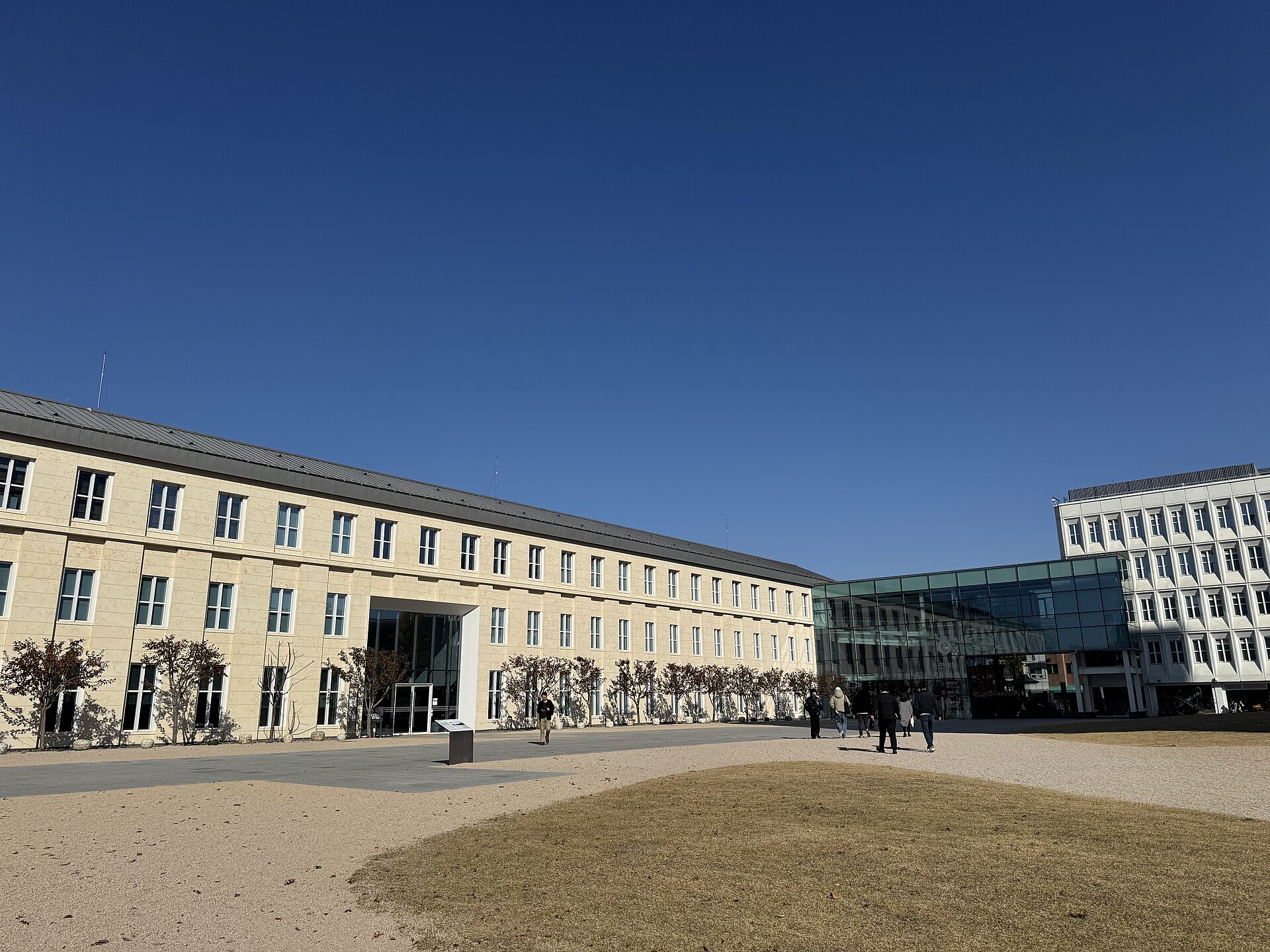
The museum is in Anguk-dong, between several places that first-time visitors often combine without a clear plan: Bukchon Hanok Village, Insadong, Changdeokgung Palace and the open Songhyeon green space. Its location is excellent, but its multi-building layout and temporary late hours create small traps. This guide focuses on the decisions that matter: which building remains open after dinner, what needs a reservation, how to arrive without a car, and what a realistic first visit looks like.
1. Know which door stays open late
Regular exhibition hours are 10 a.m. to 6 p.m. on both weekdays and weekends, with final admission at 5:30 p.m. The museum is normally closed on Mondays and January 1. When a Monday is a public holiday, the main museum may open, but that exception does not automatically apply to every facility.
From September 15 through November 30, 2026, Building 1, written 전시1동 in Korean, stays open until 9 p.m. on Tuesday, Wednesday, Friday, Saturday and Sunday. Thursday remains a 6 p.m. closing day. Buildings 2 and 3 and the Education Building, which contains the Children’s Museum, are not part of the extended evening operation. If you arrive after 6 p.m., plan a focused visit to Building 1 rather than expecting the whole complex.
| Your plan | Best arrival | What to prioritize |
|---|---|---|
| See several buildings | Before 3:30 p.m. | Buildings 2 and 3 first, Building 1 last |
| After-work museum stop | Around 7 p.m. on an eligible day | Building 1 permanent and special exhibitions |
| Visit with young children | Your reserved daytime session | Education Building check-in |
| Use the craft archive | Tuesday–Friday before 5 p.m. | Avoid the 11:30–13:00 closure |
The outdoor craft courtyard is restricted from 10 p.m. to 8 a.m. for safety. Evening access is therefore useful for an exhibition, not an all-night public-space visit. After November 30, base your plan on the regular 10 a.m.–6 p.m. timetable unless the museum announces a new extension.
2. A first visit that fits into 90 minutes
Start on the second floor of Building 1 with the permanent exhibition Artisans — Making the World Better, shown in Korean as 장인, 세상을 이롭게 하다. It introduces craft through materials, techniques and use rather than presenting objects only as decoration. Give this section about 30 minutes. Instead of trying to remember every object name, compare what changes when a maker works with wood, metal, clay or fiber.
Continue to the third floor for the current special exhibition Equinox: Autumnal Equinox_Vernal Equinox, or 에퀴녹스: 추분_춘분. It runs from September 22, 2026 through March 7, 2027. The exhibition follows designer Chang Eung-bok’s work across roughly four decades, showing how patterns inspired by traditional women’s craft and folk art move into fabric, furniture and lived space. The official presentation is arranged in three parts, making it easier to follow pattern as it expands from a surface into an environment.
Use the final 20 to 25 minutes according to your interests. During daytime weekday hours, serious craft researchers may choose the archive room in Building 2. It opens Tuesday through Friday from 10 a.m. to 5:30 p.m., pauses from 11:30 a.m. to 1 p.m., stops admission at 5 p.m. and closes on public holidays. Casual visitors may prefer to walk between the remodeled former school buildings and look at how the complex itself connects old urban fabric with a contemporary museum.
Confirm same-day operations at the information building for 5 minutes → permanent exhibition in Building 1 for 30 minutes → current special exhibition for 30 minutes → archive or courtyard for 20 minutes → walk toward Anguk or Songhyeon for 5 minutes.
Flash, tripods and commercial photography are prohibited. Food and drinks should not enter exhibition areas. Crafts reward close looking: notice joints, surfaces, repeated patterns and the relationship between an object’s material and its intended use. A slower route through two exhibitions is usually more satisfying than rushing through every building.
3. Families need a reservation, even though entry is free
The Children’s Museum is not a casual walk-in addition to the adult galleries. Visitors need an online reservation, then show the booking at the first-floor desk of the Education Building before entering the activity spaces on floors two and three. In 2026, the official eligibility is children aged nine or younger by Korean calendar-year guidance—those born in 2017 or later—accompanied by an adult. The activity difficulty is designed mainly for ages five to nine.
It operates four sessions per day between 10 a.m. and 5:50 p.m., Tuesday through Sunday. It closes every Monday and on January 1. This matters on a public-holiday Monday: the main museum may open, but the Children’s Museum remains closed. Do not build a family day around free admission alone; secure the children’s session first, then place a short adult-gallery visit around it.
Arrive 15 to 20 minutes before your session if you use a stroller or mobility aid. The museum is a campus of several buildings, not one compact hall. With children, turn the permanent exhibition into a material hunt: ask what an object is made from, what tool may have shaped it and where it might have been used. Those questions are easier to sustain than a long list of historical names.
4. Arrive from Anguk Station, not with a parking assumption
Take Seoul Subway Line 3 to Anguk Station (안국역) and use Exit 1. The museum’s own directions put the walk at about 60 meters, roughly one minute. This is the most reliable approach for international visitors because there is no general visitor parking lot at the museum.
The official visitor page lists nearby alternatives such as Jeongdok Public Library, MMCA Seoul and several public roadside parking areas, but each has separate hours, fees and availability. Driving therefore adds uncertainty and a walk. If you are already staying near a Line 3 station, the subway is almost always the simpler choice.
Two accessible parking spaces are available beside the information building for museum visitors whose vehicles display the required disability parking permit. They operate Tuesday through Sunday from 10 a.m. to 6 p.m., are limited to two hours per vehicle and cannot be reserved. Weekend car-free operation on Gamgodang-gil can also change the approach route. These spaces should not be treated as general drop-off parking.
5. Build an Anguk half-day without backtracking
For a morning plan, enter the museum at 10 a.m., finish around 11:30 and walk toward the open Songhyeon green space. From there, Jogyesa Temple and Insadong continue south without major backtracking. This combination balances an indoor museum with an outdoor pause and a neighborhood walk.
If Bukchon is your first stop, walk downhill toward Anguk and use the museum as your final indoor activity. Bukchon is still a residential neighborhood, not an open-air theme park, so keep voices low, avoid blocking doorways and respect restricted visiting areas. The museum offers a better place to pause, use facilities and engage with Korean craft without treating private homes as exhibits.
An evening version should stay smaller: 90 minutes in Building 1, then 20 or 30 minutes around Songhyeon if conditions are comfortable. The late opening ends on November 30, while the Equinox exhibition continues until March 7, 2027. Those are separate dates. A winter visitor in December can still see the exhibition, but should not expect the November evening timetable.
- Check whether your date is one of the five late-opening days through November 30.
- After 6 p.m., plan around Building 1 only.
- Reserve the Children’s Museum before promising it to a child.
- Use Anguk Station Exit 1 because general visitor parking is unavailable.
- Visit the archive only within its weekday and midday-break rules.
The museum works best when you choose depth over coverage. Its strongest advantage is not only free admission; it is the chance to understand how Korean craft connects material, skill and daily life in a calm museum beside one of Seoul’s busiest heritage districts.
Official information checked November 24, 2026, using Seoul Museum of Craft Art visitor and exhibition pages and the official Visit Seoul guide. Operations and programs can change. This article is for information purposes.