
A FREE MUSEUM BETWEEN GWANGHWAMUN AND SEODAEMUN
Read Seoul before walking it
Seoul Museum of History is the most efficient place to understand why the capital looks the way it does. Admission is free, and through November 30, 2026, the museum stays open until 9 p.m. on Tuesday, Wednesday, Friday, Saturday and Sunday. Thursday is the important exception: it closes at 6 p.m. A focused first visit needs about 90 minutes.
Free
Individual self-guided visit
Until 21:00 on five days
Through November 30
서울역사박물관
55 Saemunan-ro
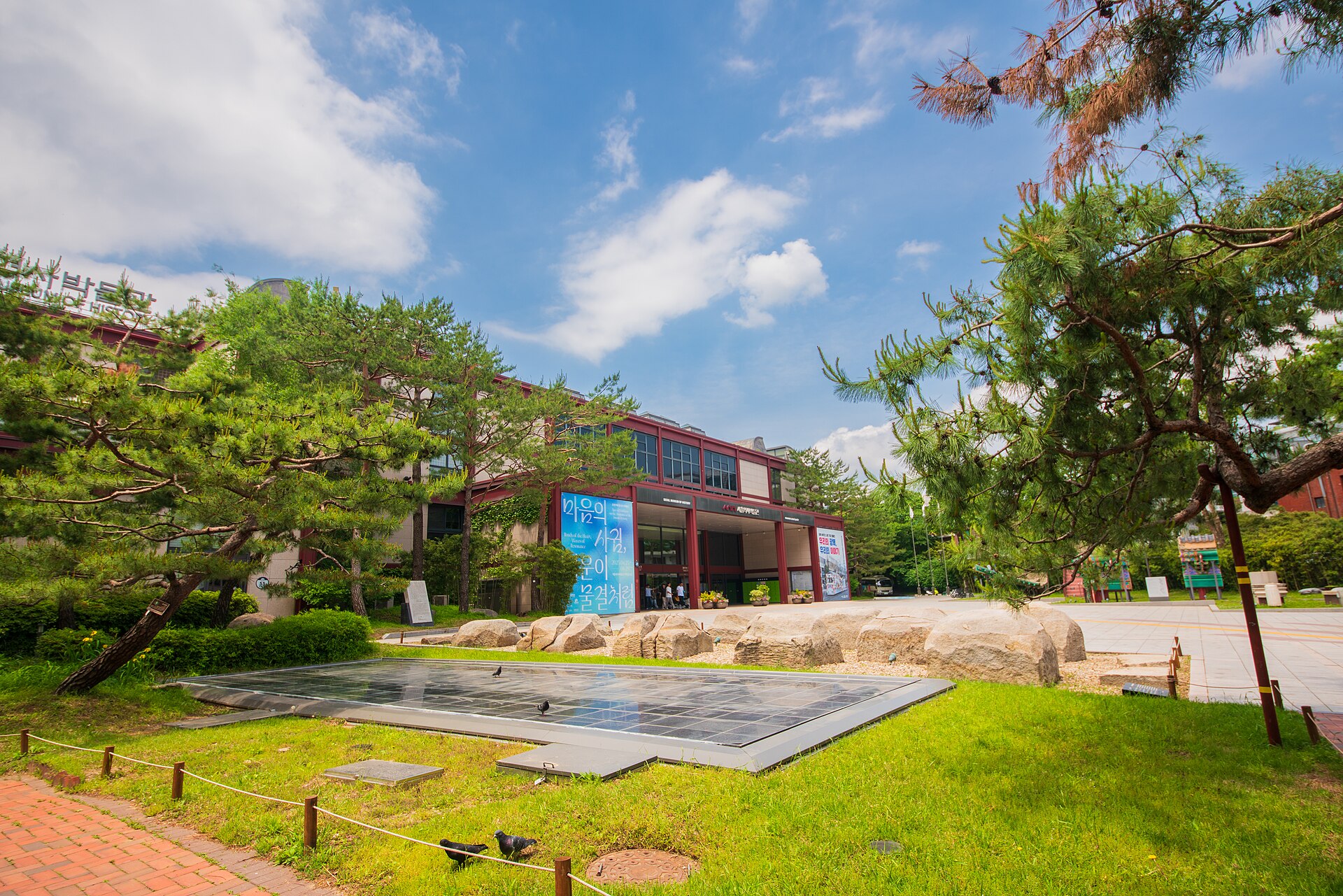
The museum sits beside Gyeonghuigung Palace, roughly halfway between Gwanghwamun Station and Seodaemun Station. It is not the National Museum of Korea in Yongsan and not the National Museum of Korean Contemporary History beside Gwanghwamun Square. Search the Korean name 서울역사박물관 in a map app so that you arrive at the correct building.
1. Check the day before relying on late hours
From September 15 through November 30, 2026, the museum opens from 9 a.m. to 9 p.m. on Tuesday, Wednesday, Friday, Saturday and Sunday. Final admission is 8:30 p.m. Thursday operates from 9 a.m. to 6 p.m., with final admission at 5:30 p.m. The museum is normally closed every Monday and on January 1. If Monday is an official public holiday, the main museum may open under the museum’s stated exception.
This temporary timetable is useful for travelers who want an indoor activity after central Seoul’s palaces close. It is also easy to misunderstand. Do not treat “open until 9 p.m.” as a daily rule, and do not assume it continues in December. If your visit falls after November 30, return to the official visitor page and use the regular timetable published there.
| Your plan | Best arrival | Main caution |
|---|---|---|
| First daytime visit | Before 3:30 p.m. | Leave time for the outdoor displays |
| After-dinner museum | Around 7 p.m. on an eligible day | Not available on Thursday |
| Thursday visit | Before 4 p.m. | Final admission is 5:30 p.m. |
| Museum plus palace grounds | Morning or early afternoon | Do the outdoor stop first |
2. Use one question to cross five exhibition zones
The permanent exhibition is centered on the third floor and moves through five broad zones: Seoul during the Joseon dynasty; the port-opening and Korean Empire period; Seoul under Japanese colonial rule; the high-growth decades; and the city model and video gallery. The labels contain far more material than a visitor can absorb in one short stop. A practical question is: how did walls, roads, transport and housing change who could move through the city?
Spend the first 20 minutes on Hanseong, the walled capital of Joseon. Look at the relationship among the gates, palaces, markets and residential areas. Use another 20 minutes for the late nineteenth and early twentieth centuries, when new roads, trams, railways and institutions began reshaping the city. The colonial-era section requires slower reading because urban modernization and coercive rule cannot be reduced to the same story.
Give the postwar and high-growth section about 25 minutes. It connects rapid population growth, housing, roads and redevelopment to the metropolitan landscape travelers see today. Keep the city model gallery for the final 20 minutes. Finding the Han River, mountains, royal-palace district and your accommodation in the model turns the earlier historical sequence into a usable mental map.
Confirm operations at the first-floor desk for 5 minutes → Joseon and port-opening zones for 25 minutes → colonial and high-growth zones for 30 minutes → city model gallery for 20 minutes → donated objects or outdoor display for 10 minutes.
The first floor includes donated-object displays, and the forecourt has outdoor exhibits. Add 30 minutes if those are important to you. Visitors with a toddler or an older family member can ask about the museum’s limited number of strollers and wheelchairs. Lockers are available near the main entrance, which is useful if you have been shopping or moving between hotels.
3. English support is better than the exterior suggests
The permanent galleries use Korean, English, Chinese and Japanese for object information and exhibition panels. QR codes on third-floor labels connect a visitor’s own phone to object pages. A free handheld audio guide in the same four languages is available at the first-floor information desk. You need to submit identification and complete a short application, then retrieve the identification when the device is returned.
That detail matters for an international traveler. If you do not want to leave a passport or other identification at the desk, use the QR material on your phone instead. Bring headphones and a charged battery. Commercial tour groups cannot borrow the handheld devices under the museum’s visitor rules and are directed toward the mobile option.
Individual visitors do not need an admission reservation. Groups of 20 or more, guided tours and educational programs follow separate booking rules. The museum lists English guided tours as available by inquiry, but this should not be read as a guaranteed walk-in English tour at every hour. Confirm the date and language before building a day around a guide.
4. Choose Gwanghwamun or Seodaemun by your next stop
The official Korean directions place the museum about a ten-minute walk from both Gwanghwamun Station (광화문역) Exit 7 and Seodaemun Station (서대문역) Exit 4, both on Seoul Subway Line 5. Gwanghwamun is the natural approach if you are coming from Gyeongbokgung, Gwanghwamun Square or Jongno. Seodaemun is simpler from Chungjeongno, Ahyeon or accommodation west of the city center.
Neither exit opens directly in front of the museum. Allow about 15 minutes for traffic lights, orientation and winter conditions. Use the address 서울특별시 종로구 새문안로 55 or the Korean place name in navigation. The museum’s plaza is visible from the main road, next to Gyeonghuigung Palace.
The on-site parking lot has 114 spaces and operates 24 hours. A small vehicle costs KRW 1,000 for the first hour and KRW 400 for each additional five minutes. That makes 90 minutes KRW 3,400 and two hours KRW 5,800. A prepaid day is KRW 22,000. Availability is not guaranteed, and central-Seoul traffic can erase the convenience of parking. For one or two travelers, Line 5 is normally the more predictable choice.
5. Pair it with Gyeonghuigung, not a closed house museum
Gyeonghuigung Palace is immediately beside the museum. In late November, use daylight for the outdoor grounds and move indoors afterward. This order also helps the exhibition: you have just walked a surviving royal site before seeing how Seoul expanded far beyond its old walls. A simple half-day is 40 minutes around the palace grounds, 90 minutes in the museum and a walk toward Gwanghwamun for a meal.
Do not automatically add Gyeonggyojang House Museum because it appears nearby on a map. Its official page says the building is temporarily closed for repairs from September 15 through December 12, 2026. It is an important modern-history site, but it is not a usable stop on today’s route. Donuimun Museum Village or a walk toward Gwanghwamun is a more realistic substitute while the closure remains in force.
An evening version should be smaller. Enter the museum around 7 p.m. on one of the five late-opening days, complete the permanent-gallery route and leave nearby outdoor sites for another daylight visit. On Thursday, reverse the logic: enter no later than mid-afternoon because the museum closes at 6 p.m.
- Check whether your date uses the temporary November timetable.
- Remember that Thursday closes three hours earlier.
- Bring identification only if you want the handheld audio guide.
- Use the Korean museum name to avoid a similarly named institution.
- Exclude Gyeonggyojang until the repair closure ends.
The museum is most useful before, not after, you have exhausted yourself walking central Seoul. Its permanent galleries give structure to the walls, palaces, wide boulevards, apartment districts and transport lines outside. Ninety focused minutes can make the rest of the city easier to read.
Official information checked November 26, 2026, using Seoul Museum of History visitor, parking, directions and reservation pages, plus the official Gyeonggyojang notice. Operations may change. This article is for information purposes.